Key takeaways
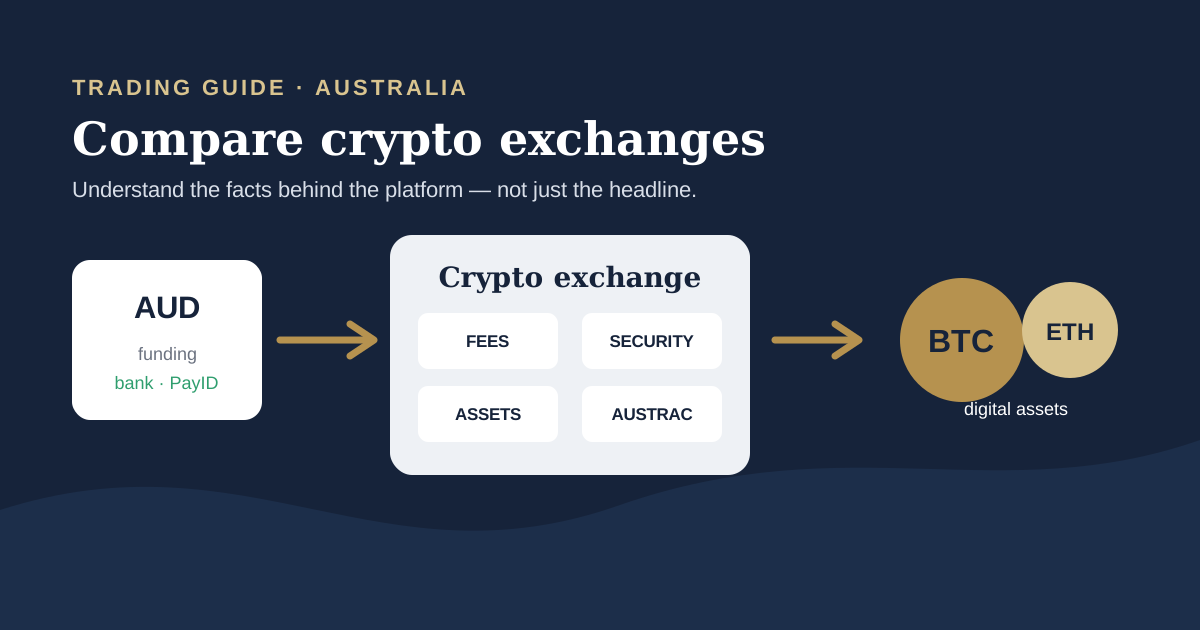
- Australian crypto exchanges can differ materially in trading fees, spreads, AUD deposit methods, available assets, trading tools and withdrawal costs.
- Virtual asset service providers that provide registrable services in Australia must be registered with AUSTRAC. The public VASP register can be used to check registration status.
- AUSTRAC registration is not a guarantee that an exchange or a crypto asset is safe, and it should not be confused with the consumer protections that may apply to licensed financial products.
- Compare the total cost of using an exchange: trading fees are only one part of the picture, alongside spreads, card or payment fees and crypto network or withdrawal charges.
- Crypto is highly volatile and scams are common. An exchange comparison can explain platform differences, but it cannot remove the underlying investment, custody or fraud risks.
Table of contents
- Quick comparison: established exchanges available in Australia
- What is a cryptocurrency exchange?
- How crypto exchanges work in Australia
- Cryptocurrency exchanges to research
- CoinSpot
- Swyftx
- BTC Markets
- CoinJar
- Independent Reserve
- Kraken
- What to compare before choosing an exchange
- Understand the total cost, not just the headline fee
- AUSTRAC registration explained
- Security, custody and wallets
- Crypto exchange scams and red flags
- Crypto and tax in Australia
- Before opening an exchange account
Cryptocurrency exchanges are online services that let people buy, sell and often store digital assets such as Bitcoin and Ether. For Australians, the practical differences between exchanges can be substantial: one platform may focus on a simple instant-buy experience, while another offers an order book, advanced orders or lower fees for higher-volume traders.
This guide does not rank a universal "best" exchange. Instead, it profiles established services available to Australian users and explains the facts a beginner should compare. If you already know what matters to you, you can also compare crypto exchanges side-by-side or browse our crypto exchange profiles.
Quick comparison: established exchanges available in Australia
| Exchange | AUD funding | Trading style | Useful to research if you want… |
|---|---|---|---|
| CoinSpot | Yes | Instant buy plus Markets | A simple retail interface plus AUD market trading |
| Swyftx | Yes | Retail trading platform | A broad retail feature set and volume-based fees |
| BTC Markets | Yes | Order-book exchange | AUD markets and a trading-oriented interface |
| CoinJar | Yes | Retail conversion plus CoinJar Exchange | Simple conversions and a separate order-book interface |
| Independent Reserve | Yes | Order book, recurring buys and OTC | AUD trading, business/SMSF features and volume discounts |
| Kraken | Yes | Global exchange and advanced trading | A global platform with advanced market tools |
The table is a starting point, not a recommendation or ranking. Fees, available assets and funding methods can change, so verify current details with the provider before making a decision.
What is a cryptocurrency exchange?
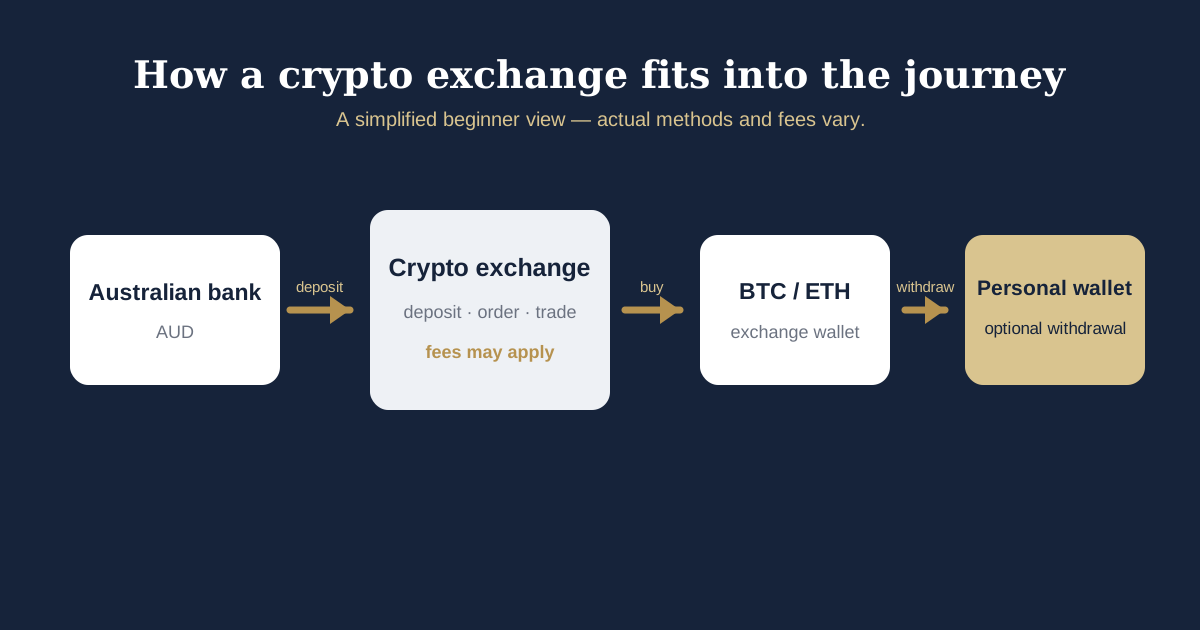
A cryptocurrency exchange is a platform that facilitates transactions involving crypto assets. Depending on the service, you may deposit Australian dollars, place an order to buy a crypto asset, hold the asset in a platform-hosted wallet, sell it later, or withdraw it to a wallet you control. The exact model matters: an instant-buy service can quote you a price directly, while an order-book market matches buy and sell orders from market participants.
How crypto exchanges work in Australia
Australian-facing exchanges commonly support identity verification and AUD funding by bank transfer or PayID, although payment methods differ. Once funds arrive, users can purchase crypto using an instant-buy interface or place orders on a market where the provider offers one. Selling generally reverses the process: crypto is sold for AUD and eligible funds can then be withdrawn to a bank account.
The important point for beginners is that "buying crypto" is not one standardised service. A provider may charge a visible transaction fee, include a spread in the quoted price, charge for particular payment methods, or apply a network-related fee when crypto is sent to an external wallet. Compare the whole transaction path rather than one number.
Cryptocurrency exchanges to research
The exchanges below are examples of established services available to Australian users. Inclusion is not a ranking, endorsement or statement that one exchange is suitable for every person. Use the provider profiles and primary sources to check current details.
CoinSpot
CoinSpot has operated in Australia since 2013 and offers both a retail buy/sell interface and CoinSpot Markets. Its Markets page currently advertises a 0.1% market trading fee. That distinction is useful for beginners: the price and fee structure of a provider's instant-buy service can differ from its order-book market. See our CoinSpot profile for the structured facts and sources we track.
Swyftx
Swyftx is an Australian crypto platform with AUD funding and a retail-focused trading interface. Its published trading-fee schedule currently starts at 0.6% for users below $100,000 of rolling 30-day trading volume and steps down through volume tiers, reaching 0.1% at the highest published tier. The practical lesson is that the same provider can charge different trading rates depending on activity. See our Swyftx profile.
BTC Markets
BTC Markets is an Australian exchange with AUD markets and an order-book trading model. It is useful to compare separately from instant-buy-first services because an order book gives traders more direct control over order price and type. BTC Markets also publishes its own fee schedule, which should be checked before trading because fee tiers and product pricing can change. See our BTC Markets profile.
CoinJar
CoinJar operates a retail conversion service as well as CoinJar Exchange. Its Australian fee page currently lists a 1% fee for standard fiat-to-crypto, crypto-to-fiat and crypto-to-crypto conversions, while CoinJar Exchange publishes a separate maker/taker schedule for order-book trading. This is a good example of why comparing only a brand name is not enough: the service used within the same provider can materially change the cost.
Independent Reserve
Independent Reserve is an Australian exchange offering an order book, recurring buys, API access and OTC services. Its Australian fee schedule currently starts at 0.50% and reduces with rolling 30-day trading volume, with lower published rates at high volume. It also supports free EFT bank withdrawals according to its current fee page. See our Independent Reserve profile.
Kraken
Kraken is a global exchange with an Australian-facing service and AUD funding options. It offers both simpler purchase flows and more advanced trading tools. Because Kraken operates multiple products and services, check the Australian product, legal entity, fee schedule and regulatory scope relevant to the service you intend to use rather than assuming every Kraken product works the same way. See our Kraken profile.
What to compare before choosing an exchange
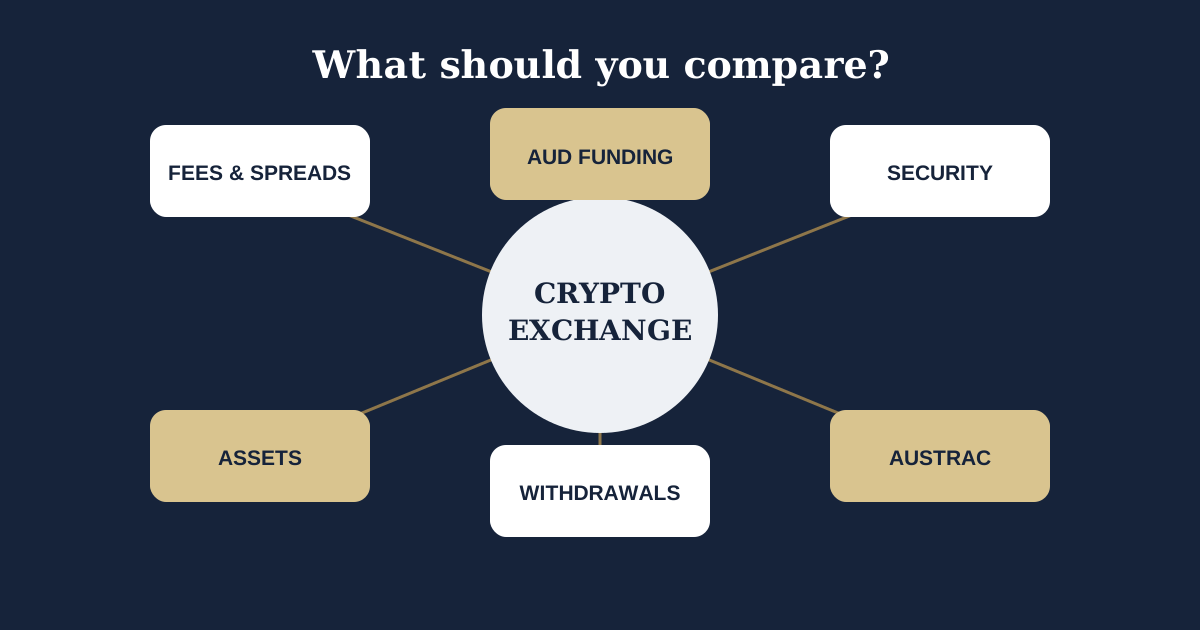
A useful exchange comparison should go beyond brand recognition. For a beginner, these are the main questions worth checking:
- AUD funding: Can you deposit and withdraw Australian dollars using the method you prefer?
- Total trading cost: What transaction fee, spread or market fee applies to the exact service you will use?
- Crypto withdrawals: Can you withdraw assets to your own wallet, and what network or withdrawal charges apply?
- Available assets: Does the platform list the assets you actually intend to research or buy?
- Order types: Do you need simple purchases only, or market, limit and stop-style orders?
- Security controls: Does the account support two-factor authentication and useful withdrawal/security controls?
- Australian registration: If the provider supplies registrable virtual asset services in Australia, can you verify it on AUSTRAC's VASP register?
- Support and records: Can you obtain transaction history and records you may need for tax and account management?
Understand the total cost, not just the headline fee
Crypto pricing can be confusing because "fee" does not always mean the same thing. A trading fee is a direct charge on a transaction. A spread is the difference between buy and sell pricing or the margin incorporated into a quoted price. A network fee relates to moving an asset on its blockchain and can vary with the network and provider policy.
Payment method also matters. Card, PayPal or third-party payment options may cost more than bank transfer or PayID. Before comparing two exchanges, map the journey you expect to use — deposit AUD, buy, potentially sell, and potentially withdraw crypto — and compare costs at each stage. Our crypto exchange fees guide goes deeper into the terminology.
AUSTRAC registration explained
AUSTRAC states that a business providing registrable virtual asset services in Australia must be registered before providing those services. Since 30 June 2026, AUSTRAC has made its VASP register public, allowing consumers to search for registered providers. Registration supports Australia's anti-money-laundering and counter-terrorism-financing framework and can be an important legitimacy check.
Registration is not a safety guarantee
AUSTRAC registration does not mean AUSTRAC has endorsed a crypto asset, guaranteed an exchange, or guaranteed that customer assets cannot be lost. Moneysmart warns that many crypto providers do not carry the same licensing or protections people may associate with traditional financial products. Treat registration as one check, not the end of your research.
For more context, read our AUSTRAC registration explainer and verify current status directly with AUSTRAC.
Security, custody and wallets
No exchange can remove the underlying risks of crypto. Moneysmart describes crypto as highly speculative and warns that assets can be lost if a platform fails, is hacked, or a user loses access credentials. When comparing exchanges, look for account controls such as two-factor authentication, withdrawal confirmation and address-management features, but also understand where your assets are held.
Leaving crypto on an exchange is convenient because the provider manages the wallet infrastructure. Withdrawing to a personal wallet gives you control of the private keys, but it also transfers responsibility to you: losing the recovery phrase or sending to the wrong address can cause permanent loss. Our wallet vs exchange guide explains the trade-off in beginner-friendly terms.
Crypto exchange scams and red flags
A familiar exchange name does not protect you from impersonation. Moneysmart warns that scammers create fake trading platforms, wallet sites and apps, and also impersonate legitimate digital-asset platforms. Always navigate to the provider's verified website yourself rather than trusting an unexpected message or advertisement.
Common warning signs include:
- unsolicited contact offering investment advice or access to a crypto platform;
- guaranteed or unusually high returns with supposedly low risk;
- pressure to deposit or transfer crypto immediately;
- a website or app that closely imitates a known exchange but uses a different address;
- requests to share passwords, recovery phrases or remote access to your device; and
- unexpected "tax", "release" or "withdrawal" payments demanded before funds can be returned.
Crypto and tax in Australia
Crypto transactions can have Australian tax consequences depending on what you do and your circumstances. Selling, swapping, spending, receiving or otherwise disposing of crypto can create record-keeping and tax obligations. Keep transaction dates, AUD values, fees and transfer records from the beginning rather than trying to reconstruct them at tax time.
Tax treatment can be detailed and can change. Check the Australian Taxation Office's current crypto guidance or obtain professional tax advice for your circumstances. This guide provides general information only and is not personal tax advice.
Before opening an exchange account
Start by deciding what you actually need. A beginner making occasional purchases may value a clear interface and simple AUD funding. Someone placing limit orders may care more about order-book liquidity and trading fees. Someone intending to self-custody may care most about crypto withdrawal support and network costs.
Then verify the provider independently, read the current fee schedule, understand how assets are held, enable strong account security, and start with an amount small enough to learn how deposits, orders and withdrawals work. If you are making your first purchase, continue with our 5 simple steps to buy cryptocurrency or read how to start investing in crypto for beginners.
Sources
- AUSTRAC — Virtual asset service providers overview
- AUSTRAC — Virtual asset service provider register goes public (30 June 2026)
- Moneysmart — Crypto assets: how they work and their risks
- Moneysmart — Crypto scams
- CoinSpot — Markets and market trading fee
- Swyftx — Trading fee tiers
- BTC Markets — Fees
- CoinJar — Australian fees and spreads
- Independent Reserve — Australian fee schedule
- Kraken — Australia
- Australian Taxation Office — Crypto asset investments
Related guides
How to Start Investing in Crypto for Beginners
Understand risk, research, storage and the decisions to make before putting money into crypto.
5 Simple Steps to Buy Cryptocurrency
A practical walkthrough from choosing an exchange to placing a first purchase.
What You Need to Start Trading: 10-Point Checklist
Money, safety net, knowledge and a plan to sort out before you choose an exchange.